Global supply chains have become more complex than ever. Businesses ship goods across countries and continents every day, relying on multiple transportation partners, ports, warehouses and distribution centers to keep operations running smoothly. While global logistics has opened new opportunities for growth, it has also introduced new challenges especially when it comes to visibility.
One delayed shipment, missing container or communication gap can disrupt production schedules, increase operational costs and affect customer satisfaction. For logistics companies, manufacturers, importers, exporters and distributors, knowing exactly where containers are and when they will arrive has become a business necessity rather than a convenience.
This is where a modern Container Tracking Platform, supported by a Logistics Management Application, is transforming the way businesses manage global supply chains. By providing real-time shipment visibility, automated updates and centralized logistics management, these digital solutions help organizations make faster decisions, reduce delays and improve operational efficiency.
Why Logistics Visibility Matters More Than Ever
Supply chains involve numerous moving parts. A single shipment may pass through shipping lines, ports, customs authorities, trucking companies, warehouses and distribution centers before reaching its destination.
Without complete visibility, businesses often rely on emails, spreadsheets, phone calls or manual status updates to determine where shipments are located. This process consumes valuable time and often provides outdated information.
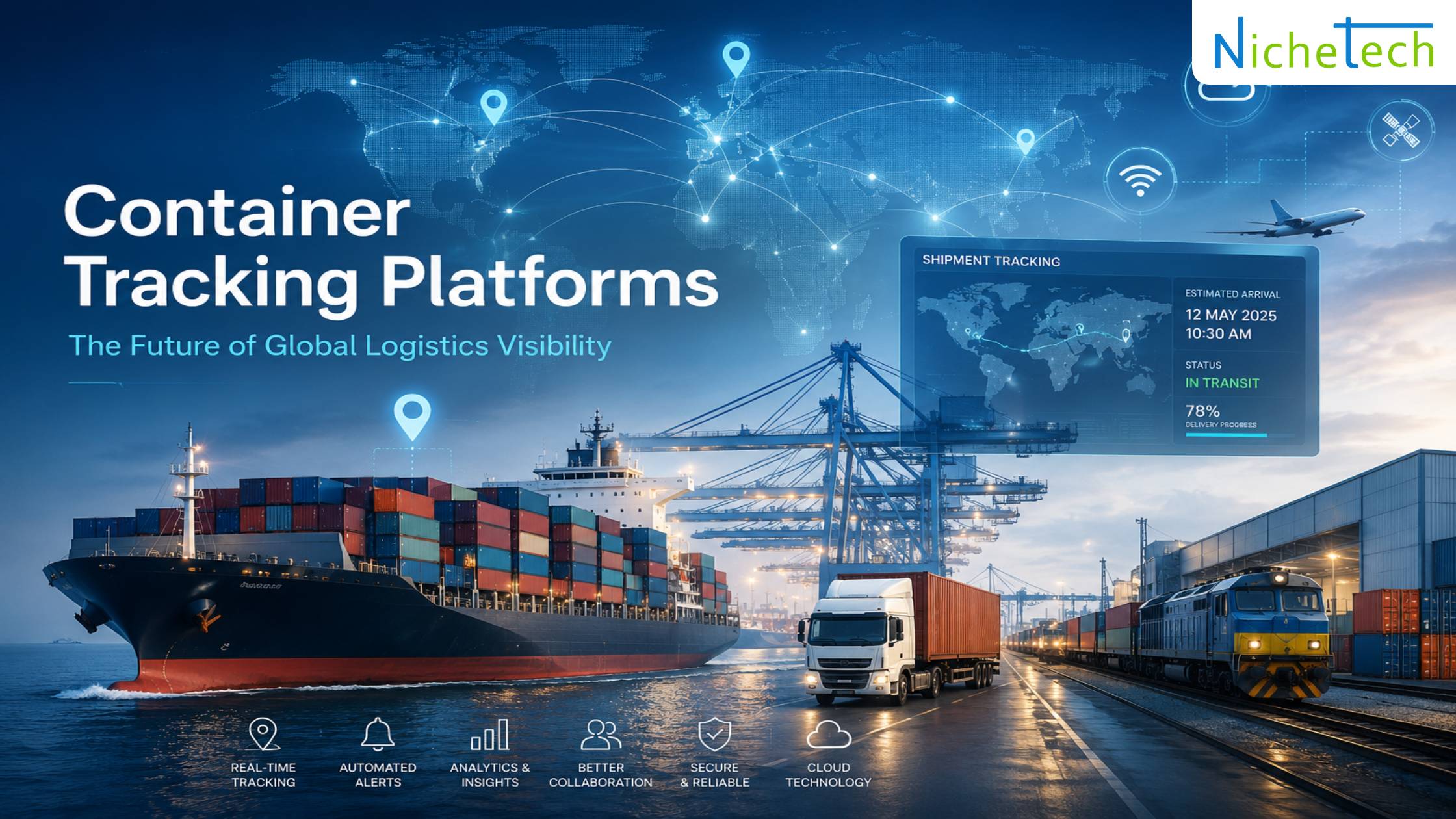
A Container Tracking Platform gives businesses real-time access to shipment data, allowing managers to monitor container locations, shipment progress, estimated arrival times and delivery status from a centralized dashboard.
Better visibility enables businesses to respond quickly when unexpected delays occur and maintain greater control over their logistics operations.
The Challenges of Traditional Container Tracking
Many organizations still depend on disconnected systems to manage shipments. Different logistics providers may use separate tracking methods, making it difficult to gather accurate information from multiple sources.
Teams often spend hours contacting carriers, checking websites or requesting manual updates simply to determine shipment status. These fragmented processes create communication delays, reduce operational efficiency and increase the risk of costly mistakes.
As supply chains continue to grow, manual tracking methods become increasingly difficult to manage.
Real-Time Tracking Improves Decision-Making
Every logistics decision depends on accurate information. A modern Container Tracking Platform provides live shipment updates, allowing logistics managers to monitor containers throughout every stage of transportation.
Instead of reacting after delays have already occurred, businesses can identify potential disruptions early and take proactive action.
Whether adjusting warehouse schedules, informing customers about revised delivery times or rerouting shipments, real-time visibility supports faster and more informed decision-making.
Better Coordination Across the Supply Chain
Successful logistics depends on effective collaboration between multiple stakeholders. Importers, exporters, freight forwarders, warehouse teams, customs brokers, transportation providers and customers all require accurate shipment information.
A Logistics Management Application centralizes communication by providing every authorized stakeholder with access to the same real-time shipment data.
This reduces misunderstandings, eliminates duplicate communication and improves coordination throughout the supply chain.
Everyone works from the same information, helping shipments move more efficiently from origin to destination.
Automated Alerts Reduce Operational Risks
Unexpected delays are common in international logistics. Weather conditions, customs inspections, port congestion, documentation issues and transportation disruptions can all affect delivery schedules.
A Container Tracking Platform automatically notifies businesses when shipment milestones change or delays occur.
Rather than discovering problems after they impact customers, logistics teams receive early warnings that allow them to adjust schedules, communicate with stakeholders and minimize business disruptions.
Proactive notifications improve planning while reducing operational uncertainty.
Centralized Data Improves Operational Efficiency
Managing logistics across multiple systems often creates unnecessary administrative work.
Shipment information, carrier details, delivery schedules, documentation and container status may exist across various spreadsheets, emails and software platforms.
A Logistics Management Application consolidates this information into one centralized system, giving logistics teams instant access to everything they need.
This reduces manual data entry, minimizes reporting errors and improves productivity across logistics operations.
Improved Customer Communication Builds Trust
Customers increasingly expect accurate shipment updates and delivery transparency. Whether shipping industrial equipment, consumer products or raw materials, businesses need reliable information to keep customers informed.
A Container Tracking Platform enables customer service teams to provide accurate shipment updates based on real-time data rather than estimates.
Clear communication strengthens customer confidence while reducing inbound inquiries related to shipment status. Reliable updates also contribute to stronger long-term business relationships.
Data Analytics Help Optimize Supply Chains
Modern logistics platforms provide more than shipment tracking. Businesses gain access to valuable analytics covering transit times, delivery performance, carrier reliability, port delays, route efficiency and operational trends.
These insights help organizations identify recurring bottlenecks, evaluate carrier performance, optimize transportation strategies and improve future planning.
Data-driven supply chain management supports greater efficiency while helping businesses reduce operational costs.
Scalability Supports Business Growth
As businesses expand into new markets, logistics operations become increasingly complex.
More shipments, additional transportation partners, multiple warehouses and international distribution networks require technology that can grow alongside the business.
A scalable Container Tracking Platform supports increasing shipment volumes without sacrificing visibility or operational control.
Whether managing hundreds or thousands of containers, businesses can maintain consistent oversight across their global supply chain.
Why Custom Logistics Software Is Becoming Essential
Every logistics business operates differently. Some organizations manage international freight forwarding, while others focus on manufacturing, distribution, retail supply chains or import-export operations.
Generic software may not fully support specialized workflows, reporting requirements or industry-specific integrations.
Working with an experienced software development company allows businesses to build custom logistics solutions tailored to their operational requirements.
A custom Logistics Management Application can integrate with ERP systems, warehouse management software, transportation management systems, CRM platforms, GPS tracking solutions and third-party logistics providers.
This creates a unified technology ecosystem that improves visibility, automation and operational efficiency across the entire supply chain.
The Future of Global Logistics Is Digital
Digital transformation is reshaping logistics worldwide. Businesses that invest in real-time visibility, intelligent automation, predictive analytics and connected logistics platforms are better prepared to manage supply chain complexity and respond to changing market demands.
A modern Container Tracking Platform helps organizations reduce delays, improve communication, optimize operations and deliver a better customer experience.
As supply chains continue to evolve, businesses that embrace digital logistics technology will gain a significant competitive advantage.
Final Thoughts
Global logistics depends on visibility, accuracy and timely decision-making. Without real-time shipment information, businesses face delays, higher costs, communication challenges and reduced customer satisfaction.
A modern Container Tracking Platform, integrated with a scalable Logistics Management Application, enables businesses to monitor shipments in real time, improve collaboration, automate communication and optimize supply chain performance.
Partnering with a trusted software development company to build customized logistics solutions ensures your technology can adapt as your business grows and your logistics operations become more complex.
In the future of global logistics, visibility is not simply an operational benefit, it is a strategic advantage that drives efficiency, resilience and long-term business success.
FAQs
1. What is a Container Tracking Platform?
A Container Tracking Platform is a digital solution that provides real-time visibility into container locations, shipment progress, estimated arrival times and logistics operations.
2. How does a Logistics Management Application improve supply chain efficiency?
It centralizes shipment management, automates workflows, improves communication, provides real-time reporting and helps businesses coordinate logistics operations more efficiently.
3. Why is real-time logistics visibility important?
Real-time visibility enables businesses to identify delays early, make faster decisions, improve customer communication and reduce operational risks.
4. Can a Container Tracking Platform integrate with existing business systems?
Yes. Custom-built logistics platforms can integrate with ERP systems, warehouse management software, transportation management systems, CRM platforms and third-party logistics providers.
5. Why should businesses choose custom logistics software?
Custom logistics software is designed around specific business workflows, offers greater flexibility, supports future growth and integrates seamlessly with existing operational systems.