
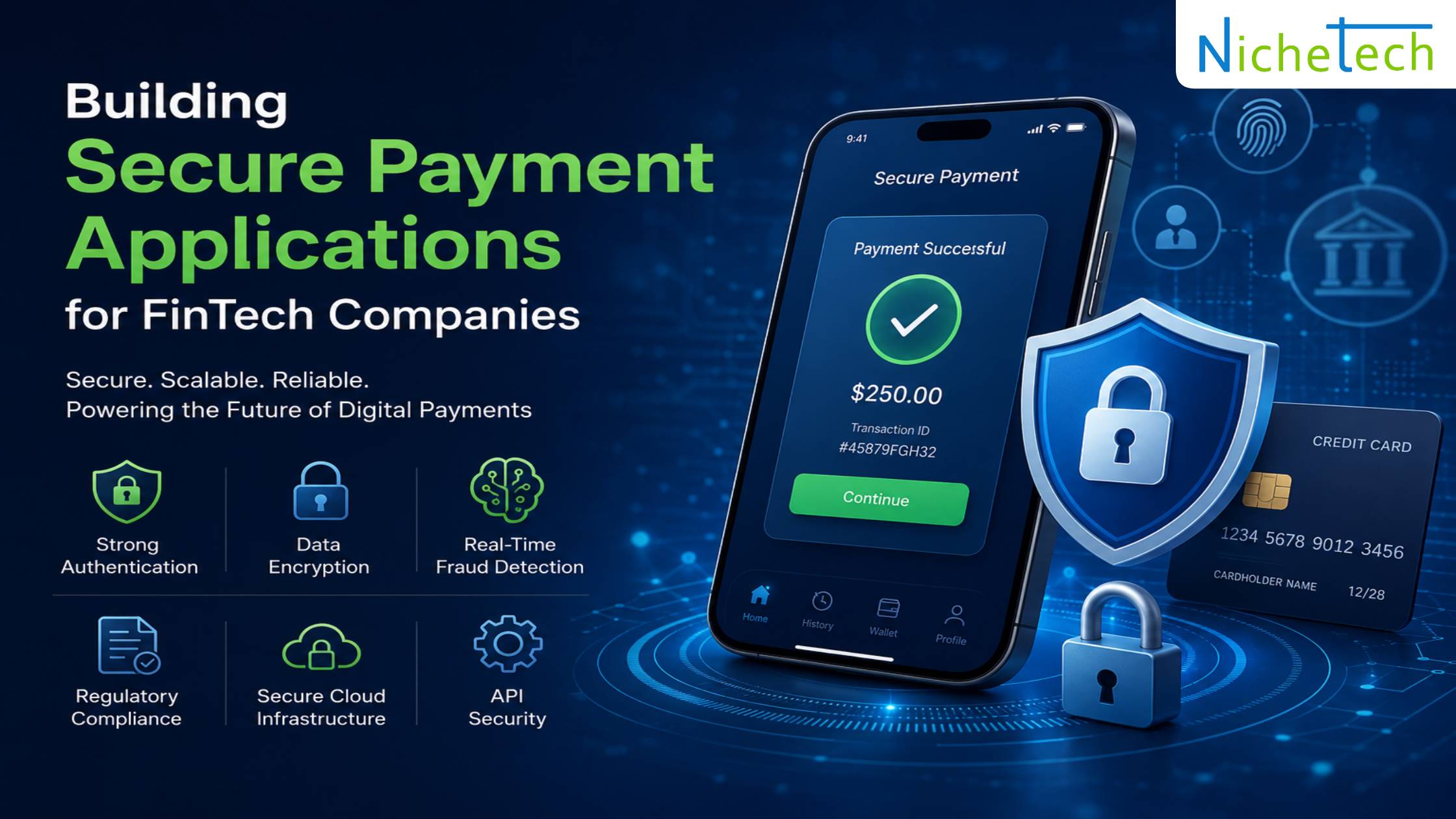
The FinTech industry has transformed how people manage, transfer and spend money. From mobile wallets and digital banking to peer-to-peer transfers and online payment gateways, customers now expect financial transactions to be fast, seamless and secure.
However, with this convenience comes greater responsibility. Every payment application processes highly sensitive financial and personal data, making security one of the most critical aspects of development. A single vulnerability can lead to financial losses, regulatory penalties and damage to customer trust.
This is why building secure payment applications requires more than attractive interfaces and advanced features. It demands robust architecture, strong security practices, regulatory compliance and scalable technology. Partnering with an experienced FinTech App Development Company helps businesses create payment solutions that are secure, reliable and ready for future growth.
Why Security Is the Foundation of Every Payment Application
Every digital payment involves confidential information, including customer identities, payment credentials, banking details and transaction records.
Cybercriminals continuously target financial platforms using techniques such as phishing, malware, account takeovers, data breaches and payment fraud.
Without proper security measures, businesses risk exposing sensitive information and disrupting financial operations.
A secure payment application protects customer data, prevents unauthorised access, and ensures every transaction is processed safely. More importantly, it builds the confidence customers need before trusting a platform with their financial information.
The Rising Demand for Digital Payment Solutions
Consumers increasingly prefer digital payments over traditional cash transactions. Businesses are also adopting online payment systems to improve customer convenience and streamline financial operations.
As payment volumes continue to grow, FinTech companies need applications capable of handling thousands or even millions of secure transactions without compromising speed or reliability.
A scalable application ensures businesses can support increasing customer demand while maintaining consistent performance and security.
Strong Authentication Protects User Accounts
One of the most effective ways to secure payment applications is through robust user authentication.
Modern payment platforms often use multi-factor authentication (MFA), biometric verification such as fingerprint or facial recognition, one-time passwords (OTPs) and secure login protocols to verify user identities.
These security measures significantly reduce the risk of unauthorised account access and fraudulent transactions.
By implementing multiple layers of authentication, FinTech companies strengthen customer protection without sacrificing user convenience.
Data Encryption Safeguards Sensitive Information
Financial information should never be transmitted or stored without proper protection. Encryption converts sensitive data into unreadable formats that can only be accessed by authorised systems.
Whether data is stored on servers or transmitted between users and payment platforms, strong encryption helps prevent cybercriminals from intercepting confidential information.
Secure encryption standards are an essential part of every modern payment application.
Real-Time Fraud Detection Improves Transaction Security
Fraud prevention has become a major priority for financial technology companies. Modern payment applications increasingly use Artificial Intelligence and machine learning to monitor transaction behaviour in real time.
These intelligent systems analyse payment patterns, identify unusual activities, detect suspicious transactions and trigger security alerts before fraudulent activity can cause financial damage.
Real-time fraud monitoring helps businesses minimize risks while protecting both customers and financial institutions.
Regulatory Compliance Builds Customer Confidence
Payment applications must comply with industry regulations and security standards designed to protect financial data.
Depending on the market and payment services offered, businesses may need to meet standards related to payment security, data privacy, anti-money laundering (AML) and Know Your Customer (KYC) requirements.
Working with an experienced FinTech App Company helps ensure these compliance requirements are considered throughout the development process rather than added later as costly updates.
Compliance not only reduces legal risks but also strengthens customer confidence.
Cloud Infrastructure Supports Secure Growth
Modern payment applications often rely on cloud technology to provide flexibility, scalability and reliability.
Cloud-based infrastructure allows businesses to process increasing transaction volumes, maintain high availability and recover quickly from unexpected disruptions.
Combined with strong security controls, cloud environments enable FinTech companies to grow while maintaining excellent system performance and operational resilience.
API Security Is Essential
Payment applications rarely operate in isolation. They frequently integrate with banks, payment gateways, accounting systems, identity verification services, merchant platforms and other third-party solutions through APIs.
Every integration introduces potential security risks if APIs are not properly protected.
Secure API authentication, encrypted communication, access controls and continuous monitoring help ensure these integrations remain safe while supporting seamless payment experiences.
Building Trust Through User Experience
Security should never make an application difficult to use. Customers expect payment processes to be both safe and simple.
A well-designed payment application balances advanced security with an intuitive user experience, allowing customers to complete transactions quickly while remaining fully protected.
When users feel confident that their information is secure, they are more likely to continue using the platform and recommend it to others.
Why Choosing the Right Development Partner Matters
Building secure financial applications requires expertise in software engineering, cybersecurity, compliance, cloud infrastructure, payment technologies and user experience design.
An experienced FinTech App Development understands these complex requirements and develops applications that combine security, performance, scalability and reliability.
From architecture planning and secure coding to testing, deployment and long-term maintenance, the right technology partner helps businesses reduce risks while accelerating innovation.
Preparing for the Future of Digital Payments
The future of digital payments will continue to evolve with innovations such as AI-powered fraud detection, embedded finance, digital wallets, contactless payments, blockchain technologies and open banking.
As customer expectations continue to rise, FinTech companies need payment applications that can adapt quickly without compromising security.
Investing in secure and scalable software today helps businesses remain competitive while preparing for tomorrow’s financial ecosystem.
Final Thoughts
Digital payments have become an essential part of modern business, but every transaction depends on trust.
Building secure payment applications requires far more than attractive interfaces and payment processing features. It demands strong security architecture, data encryption, intelligent fraud prevention, regulatory compliance and scalable infrastructure.
Partnering with a trusted App Development Company enables businesses to develop payment solutions that protect customer information, support business growth and deliver reliable financial services.
In today’s competitive FinTech landscape, security is not simply a feature it is the foundation of long-term success.
FAQs
1. Why is security important in payment applications?
Payment applications handle sensitive financial and personal information. Strong security protects customer data, prevents fraud and builds user trust.
2. What security features should a payment application include?
Essential features include multi-factor authentication, encryption, secure APIs, fraud detection, role-based access control and continuous security monitoring.
3. How does AI improve payment security?
AI helps detect suspicious transaction patterns, identify potential fraud in real time, and reduce financial risks through intelligent monitoring.
4. Why should FinTech companies invest in custom payment applications?
Custom payment applications provide better security, scalability, flexibility and integration capabilities than generic solutions, allowing businesses to meet specific operational and regulatory requirements.
5. How can a FinTech App Development Company help?
A FinTech App Development Company designs, develops, tests and maintains secure payment applications while ensuring compliance, high performance, seamless integrations and long-term scalability.